
Texas Data Center Growth Requires Certainty, Infrastructure, and Local Partnership

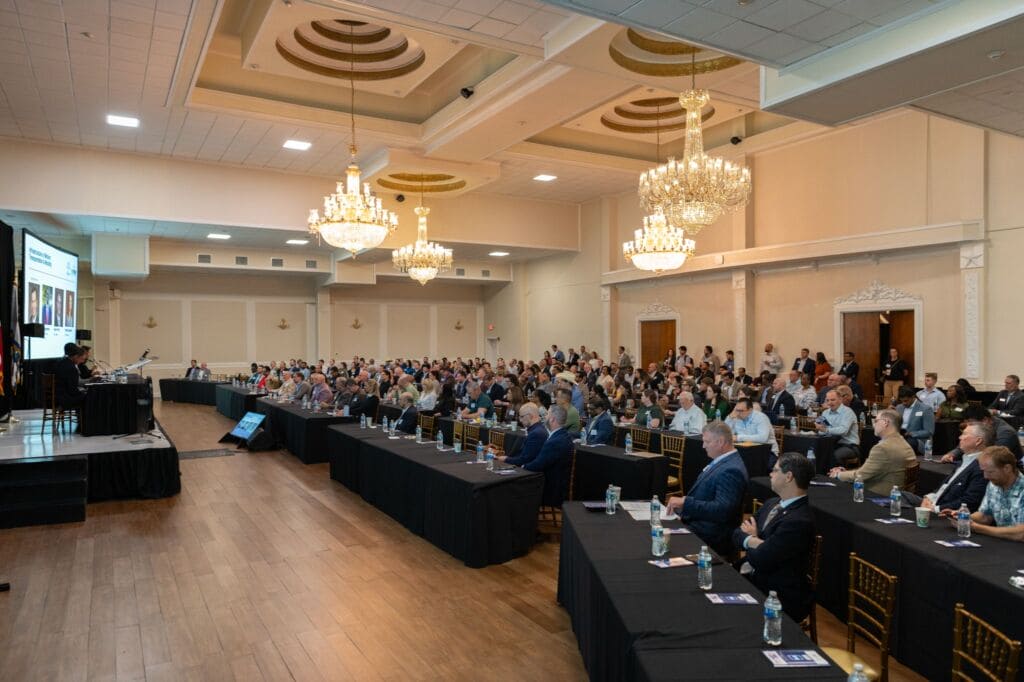
The Data Center Coalition’s Jess Heck, TAB’s Gabriela von zur Muehlen, and Houston Chronicle Columnist Chris Tomlinson participate in a panel discussion on data centers at the 2026 Fort Bend Infrastructure Conference on September 18, 2026.
Recently, I was honored to participate in an important panel discussion, “Data Center Power: Myths, Facts and the Fine Print,” hosted by the Fort Bend Regional Partnership and the Central Fort Bend Chamber as part of the 2026 Fort Bend Infrastructure Conference. The panel brought together industry, business, and economic development leaders to separate perception from reality on one of the biggest infrastructure conversations in Texas. Alongside Jess Heck of the Data Center Coalition and Chris Tomlinson of the Houston Chronicle, we took on some of the biggest myths circulating about data centers and dug into the harder questions being raised in communities across Texas.
TAB’s position on data centers has been consistent. As we made clear to the Texas House State Affairs Committee in both April and August, data centers are critical infrastructure in Texas’ modern economy, supporting everyday business operations in every sector — banking, healthcare, energy, logistics, communications, and more — while enabling the digital services Texans rely on daily. Contrary to popular assumptions, not every data center is an AI facility. Growing demand for AI is certainly driving much of the recent data center growth, but the majority of data centers currently in operation support cloud computing, streaming, and other digital services. Many have been running Texas banking, hospitals, classrooms, and public safety systems for decades.
Much of the concern surrounding data centers has centered on how they use two critical resources: water and power. With America’s foreign adversaries actively seeking to spread disinformation about the impact of data centers, it is more important than ever for Texans to have access to reliable facts. When it comes to water, the Houston Advanced Research Center found that data centers accounted for less than half a percent of all water used in Texas last year. On electricity costs, data center growth is driving substantial new investment in generation, and a study from Lawrence Berkeley National Laboratory found that states adding large data center loads, including Texas, saw lower overall electricity prices between 2019 and 2024.
The panel agreed that transparency and direct engagement are essential to building public trust in Texas communities. Maintaining that trust and dialogue helps pave the way for investments that bring new capital, tax revenue, and meaningful job creation to Texas communities that often get overlooked for large-scale industrial projects.
According to a comprehensive study published by PwC earlier this year, the data center industry directly supported roughly 103,700 Texas jobs in 2024 and more than 428,000 jobs statewide once indirect and induced effects are counted, contributing more than $65 billion to our state’s GDP and generating $39 billion in labor income that year. The study also found that data centers generated $4.5 billion in state and local tax revenues during the same year, with about $2.3 billion going to local governments to support schools, roads, and other critical infrastructure that continues to make Texas an attractive place for business investment.
With the benefits clear and demand on the rise, the opportunity extends well beyond the data center industry itself. The computing capacity these facilities provide will underpin growth across artificial intelligence, advanced manufacturing, healthcare, financial services, and countless other sectors of the modern economy. Texas should not aspire merely to host that infrastructure – we should build the conditions that allow the industries and innovation it enables to grow here as well. Data centers need regulatory consistency in order to build responsibly and plan for future investment in Texas. Like any other industry, data center developers cannot commit capital with shifting rules that change after the fact, or in the middle of a project’s development.
Thankfully, Texas already took an important proactive step last session by passing Senate Bill 6, which requires large loads like data centers to pay the grid interconnection costs utilities incur to serve them, ensuring those costs are not shifted onto other ratepayers or driving up the cost of electricity for local residents and businesses. Now, the Public Utility Commission of Texas (PUCT) and the Electric Reliability Council of Texas (ERCOT) are finishing implementation of that framework while carrying out the audit process ordered by Governor Abbott, which is meant to separate serious, committed data center projects from those that are merely speculative.
Texas can and should be a national model for responsible, sustainable data center development, but it all hinges on having a predictable set of policies, continued investment in the infrastructure necessary to support growth, and meaningful engagement with local communities. Done right, data center development can expand local tax bases, strengthen infrastructure, create workforce opportunities, and generate investment that benefits communities well beyond the walls of an individual facility. We look forward to continuing our work with Texas lawmakers and agency leaders heading into the 90th Texas Legislature, as well as local chambers, communities, and industry partners to ensure there are clear and consistent rules of the road for data center projects and that communities across the state can continue to reap the enormous economic benefits data center investments bring.
Texas does not have to choose between economic growth and responsible stewardship. We can and must accomplish both.
–Gabriela von zur Muehlen, Senior Vice President & Chief Policy Officer, Texas Association of Business
###